Elephant Intrusion Detection & Train Collision Avoidance System Proposal
Introduction: A Silent Call for Help

As the sun sets over the dense forests of southern India, the silence is often broken by the rustling of leaves and the distant trumpeting of elephants. For centuries, these gentle giants have followed ancestral paths—routes that connect forests, water bodies, and grazing lands.
Today, those same paths intersect with railway tracks and highways.
What was once a safe passage has become a zone of danger.
Villagers recount tragic encounters—elephants struck by speeding trains, vehicles swerving dangerously to avoid herds crossing highways, lives lost on both sides. Forest officials face an increasingly urgent challenge: how to detect elephant movement early enough to prevent irreversible loss.
This is where Macnman Technologies Pvt Ltd steps in—with a vision to apply technology not as an intrusion into nature, but as a silent guardian, working alongside conservation efforts to protect wildlife and human life alike.
The Problem: When Paths Collide
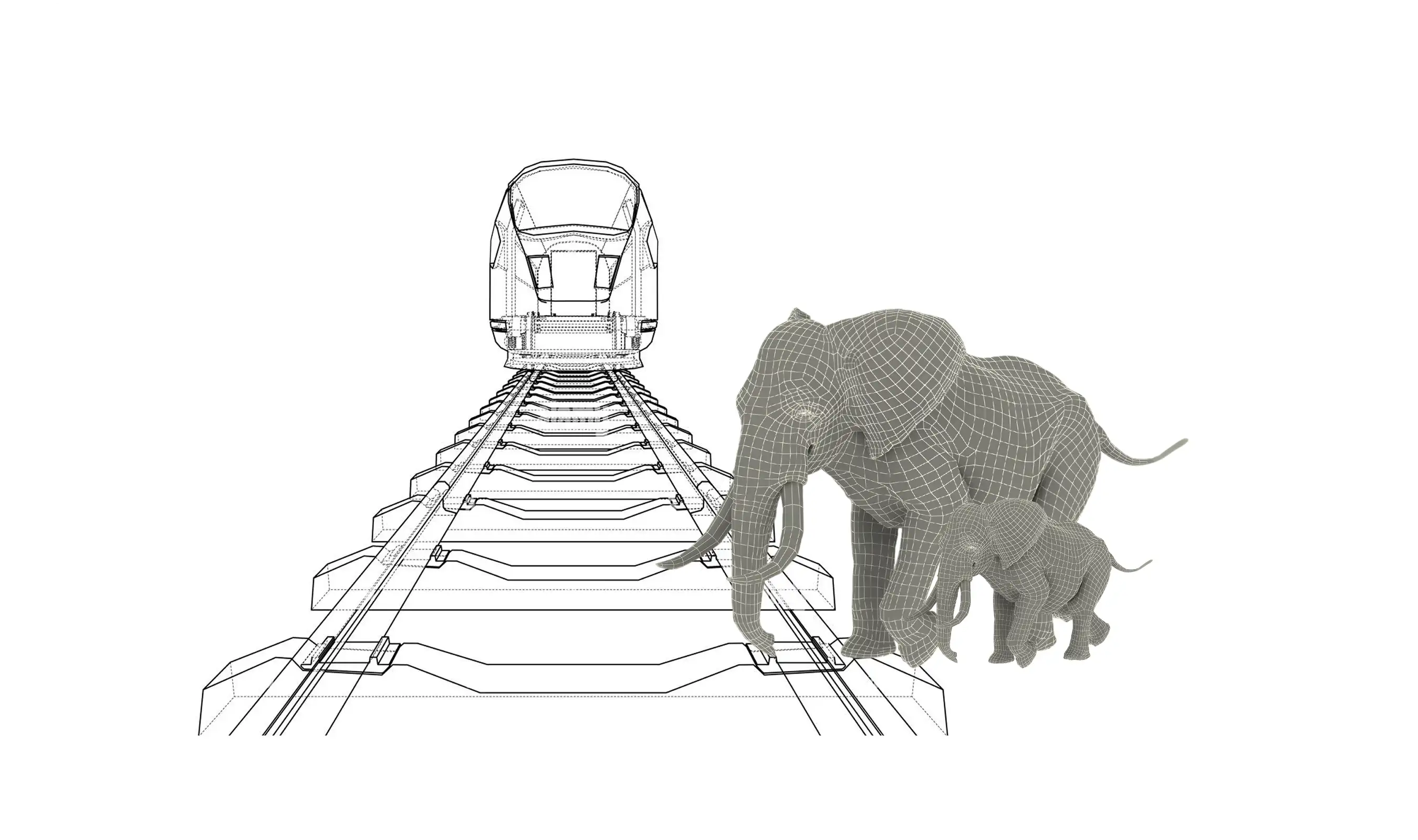
Elephants are intelligent, social animals with strong memory and migratory behavior. They follow well-established corridors passed down through generations. Unfortunately, rapid infrastructure expansion has resulted in these natural corridors intersecting with:
- High-speed railway lines
- National and state highways
- Human settlements near forest boundaries
In recent years, multiple incidents involving elephant–train and elephant–vehicle collisions have been reported across India, resulting in loss of endangered wildlife, threats to human life, and disruption of critical transport infrastructure.
The challenge is not merely detecting elephants, but detecting them early, reliably, and consistently—in environments where visibility is low, terrain is dense, weather conditions are unpredictable, and human monitoring is limited.
The critical question remains:
How can we detect elephant movement before it becomes a collision—especially in places where the human eye cannot?
Scope of the Solution
To design and deploy an integrated, wildlife-safe Elephant Intrusion Detection & Train Collision Avoidance System that enables early detection of elephant movement near railway tracks and highways and provides actionable alerts to prevent accidents.
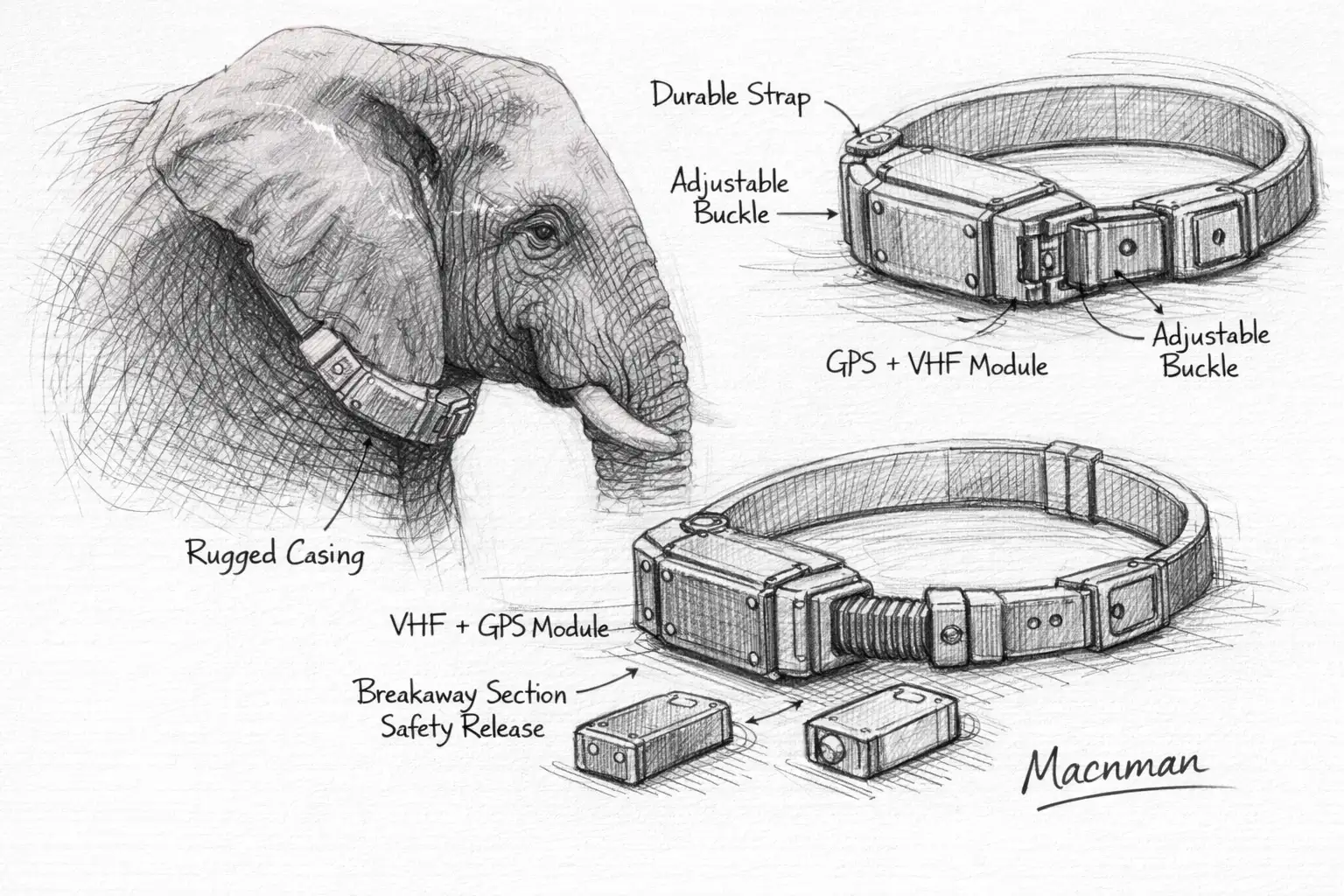

The system shall combine elephant-borne sensing, trackside detection, edge intelligence, and real-time alerting to operate reliably in dense forest environments and remote railway corridors.
This system shall enable the Customer to:
- Detect elephant presence near railway tracks and highway corridors in real time
- Provide early warnings to railway authorities, loco pilots, forest officials, and control rooms
- Reduce elephant–train and elephant–vehicle collision incidents
- Operate reliably in low-visibility conditions (night, fog, rain, dense vegetation)
- Maintain a time-stamped digital record of intrusion events for analysis and planning
- Support scalable deployment across multiple forest and railway zones
Crafting the Solution: Listening to the Earth, Seeing in the Dark
The team at Macnman Technologies Pvt Ltd recognized early that traditional surveillance approaches would not be effective in dense forest and remote railway environments. Camera-only systems struggle with canopy cover, fog, and night conditions, while continuous human monitoring is neither scalable nor reliable.
The solution required a system that could operate autonomously, far from power lines and urban infrastructure, while detecting elephants before they reached critical zones.
After extensive research and field evaluation, Macnman engineered a multi-layered intrusion detection architecture that combines ground sensing, thermal intelligence, and long-range low-power communication.
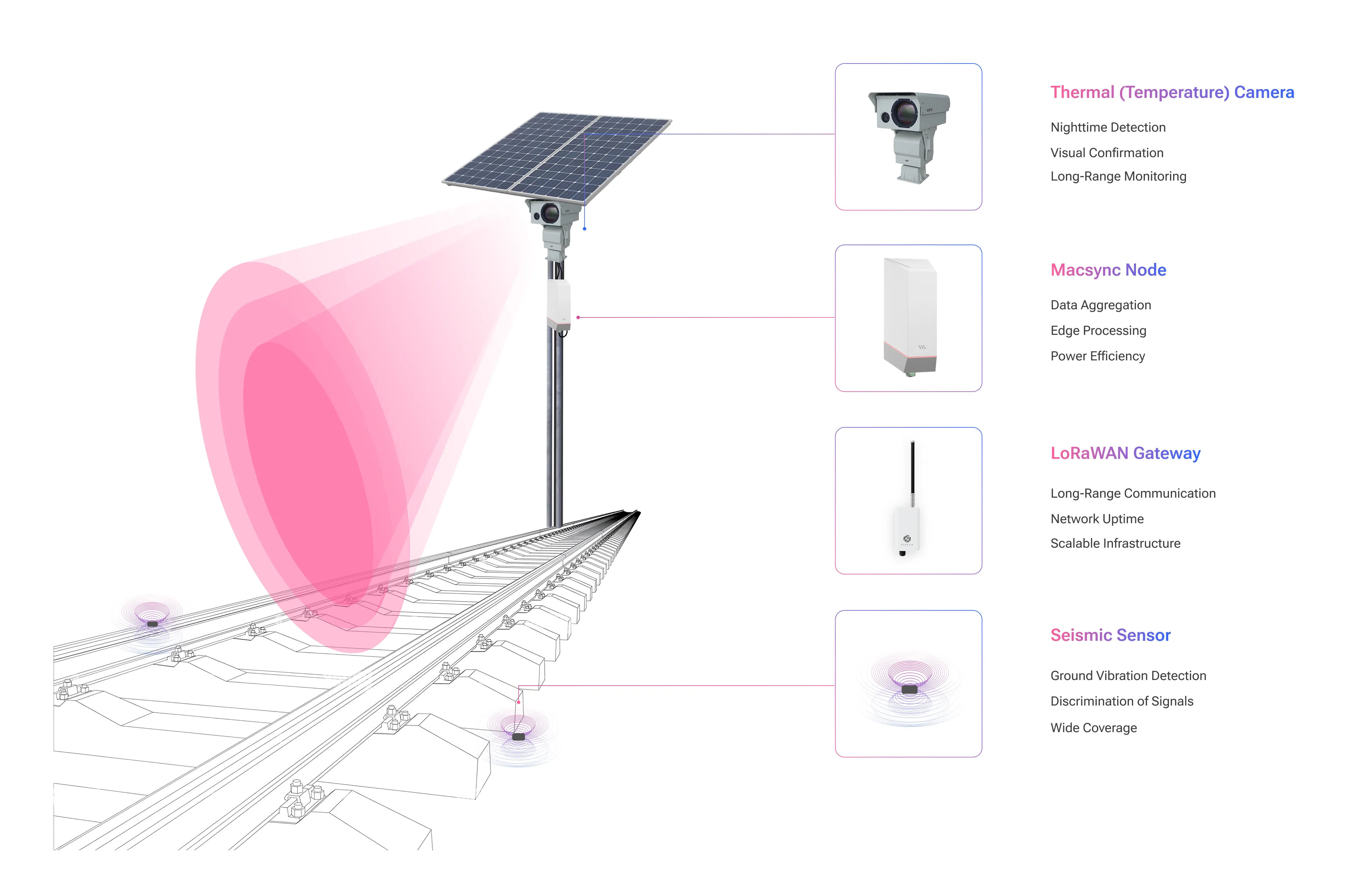
Seismic Ground Sensors – Listening to the Earth
Inspired by earthquake and structural monitoring systems, seismic sensors are deployed along elephant corridors and railway-adjacent forest zones.
These sensors are designed to:
- Detect unique low-frequency ground vibrations caused by elephant footsteps
- Differentiate elephant movement from smaller animals and ambient noise
- Operate continuously with ultra-low power consumption
This layer enables early ground-based detection, even when visibility is zero.
Thermal Cameras – Seeing in the Dark
Thermal imaging sensors provide a critical visual intelligence layer by detecting heat signatures rather than relying on visible light.
Thermal cameras:
- Detect elephants in complete darkness, fog, and dense vegetation
- Provide confirmation of intrusion events detected by seismic sensors
- Reduce false positives through cross-verification
This ensures reliable detection during night-time and low-visibility conditions, where most collisions occur.
Long-Range Communication – MacSync + LoRaWAN
To transmit intrusion data from remote forest zones to control rooms, Macnman leverages its MacSync series controllers combined with LoRaWAN-based long-range communication.
This communication layer enables:
- Kilometer-scale data transmission with minimal power consumption
- Reliable operation in areas with no cellular coverage
- Secure, event-driven data delivery to gateways and control rooms
The result is a resilient communication backbone designed specifically for wildlife and railway environments.
Together, these layers form an intelligent network capable of detecting approaching elephant herds and issuing real-time alerts to railway authorities and forest officials.
While developing this system was a significant milestone, the true challenge lay in deploying it reliably across harsh terrain, live railway corridors, and protected forest areas—a challenge Macnman addresses through careful design, phased rollout, and close coordination with field teams.
Deployment Challenges: Trials in the Wild
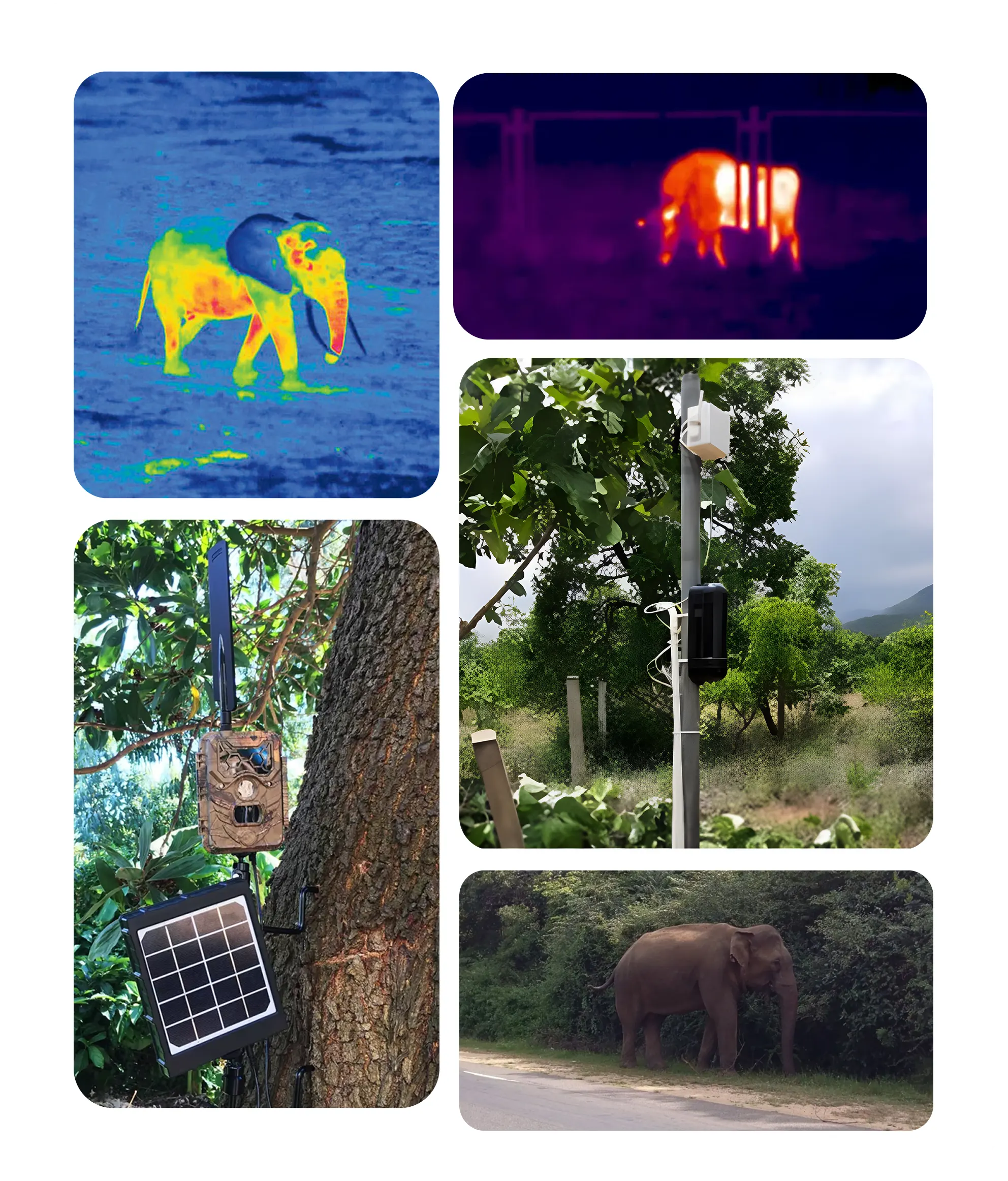
The first deployment site was deep inside the forest, where paved roads faded into dirt tracks and mobile network coverage vanished completely. Macnman’s field team reached the location with ruggedized equipment, aware that real-world conditions would test every design assumption.
Challenge #1: Power Availability
With no access to grid electricity, uninterrupted operation was a critical concern. To address this, each seismic sensor, thermal camera, and communication node was paired with an independent solar power unit and battery system. This enabled continuous, autonomous operation without reliance on external infrastructure.
Challenge #2: Wildlife Interference
Deploying technology in active wildlife corridors presents unique challenges. During early trials, a ground sensor was nearly trampled by a curious elephant calf and disturbed by wild buffalo movement. In response, the enclosures were redesigned to be low-profile, reinforced, and tamper-resistant—ensuring durability while remaining non-intrusive to animal behavior.
Challenge #3: Signal Transmission in Dense Forest Canopy
Dense vegetation and uneven terrain significantly attenuate wireless signals. To overcome this, LoRaWAN gateways were strategically installed on elevated terrain, and Adaptive Data Rate (ADR) mechanisms were configured to maintain reliable long-range communication under varying environmental conditions.
Field operations were demanding—long days in extreme heat followed by nights spent troubleshooting under open skies. Despite these challenges, the team persisted, driven by a singular objective: to build a system that performs not in controlled environments, but in the wild—protecting elephants and human lives where it matters most.
Testing & Validation: Proof of Concept
Once the system was commissioned and brought online, structured testing and validation activities were initiated to evaluate real-world performance under live forest and railway conditions.
Sensor Calibration & Event Differentiation
The seismic ground sensors were calibrated to differentiate between various sources of ground vibration. Distinct vibration signatures were observed and analyzed for:
- Passing vehicles (jeeps and maintenance units)
- Smaller wildlife such as deer
- Elephant herds moving along established corridors
Each category produced clearly distinguishable patterns, enabling accurate classification and reduction of false positives through threshold tuning and signal profiling.
Night-Time Detection & Alert Validation
The first successful real-world detection occurred during night operations at approximately 2:00 a.m. A herd of elephants was approaching a known railway crossing zone.
The system executed the following automated sequence:
- Seismic sensors detected sustained low-frequency ground vibrations
- Thermal cameras were triggered for visual confirmation
- Thermal imagery confirmed the presence of an elephant herd
- An intrusion alert was generated and transmitted to the railway control room in real time
This validated the system’s ability to operate reliably during night-time and zero-visibility conditions, where conventional surveillance methods fail.
Incident Prevention Outcomes
In a subsequent event, an early intrusion alert was generated for elephant movement near a roadway. The alert enabled timely intervention, allowing a fast-moving vehicle to slow down and safely avoid a potential collision with crossing elephants.
This demonstrated the system’s effectiveness in preventing incidents, rather than reacting after an accident has occurred.
Field Robustness & Design Iteration
During extended field operation, sensors were exposed to direct wildlife interaction. In one instance, a ground sensor was nearly trampled by a curious elephant calf and disturbed by wild buffalo movement.
Based on these observations, the system underwent rapid design improvements:
- Reinforced and tamper-resistant enclosures
- Improved ground mounting and anchoring mechanisms
- Enhanced protection for long-term outdoor deployment
These changes improved system durability without altering animal behavior or movement patterns.
Data Visualization & Operational Insights
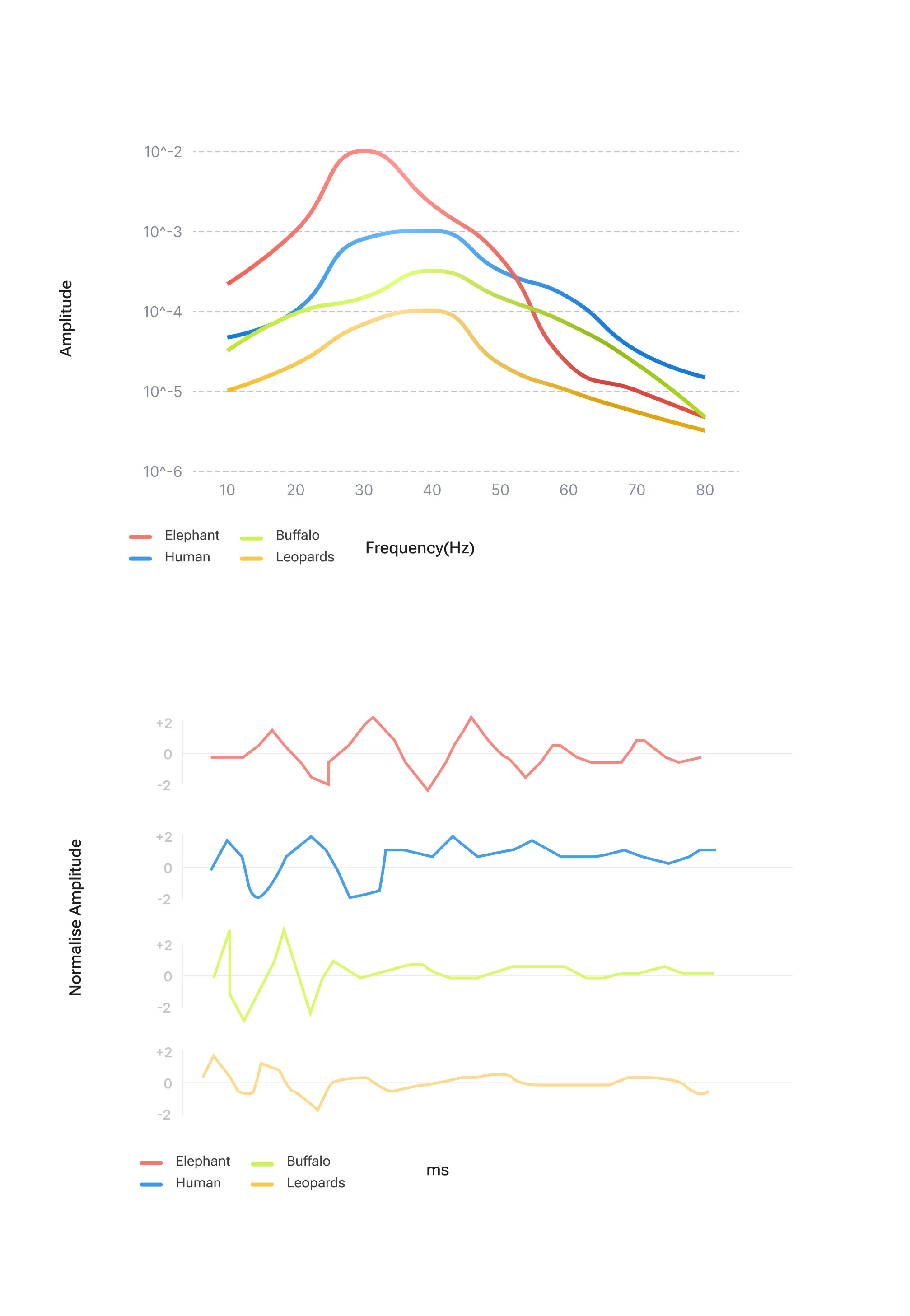
System data was visualized through dashboards and logs that provided clear operational insights:
- Time-series graphs showing spikes in seismic activity during elephant intrusion events
- Correlated timelines linking seismic detection, thermal confirmation, and alert generation
- Thermal imagery capturing clear silhouettes of elephant herds moving through forest corridors
These visualizations provided both operational confidence for real-time response and analytical value for long-term planning and validation.
The testing and validation phase confirmed the system’s readiness as a field-proven proof of concept, capable of reliable detection, accurate validation, and timely alerting under real-world forest and railway conditions.
Impact: A New Dawn for Conservation
The impact of the Elephant Intrusion Detection & Train Collision Avoidance System was both immediate and measurable, demonstrating the value of early detection, timely alerts, and coordinated response.
Measurable Safety Outcomes
- 13% reduction in significant elephant-related incidents within the monitored zones during the pilot phase
- Early identification of elephant movement well before entry into high-risk railway and roadway corridors
- Improved response time for railway operators and on-ground teams
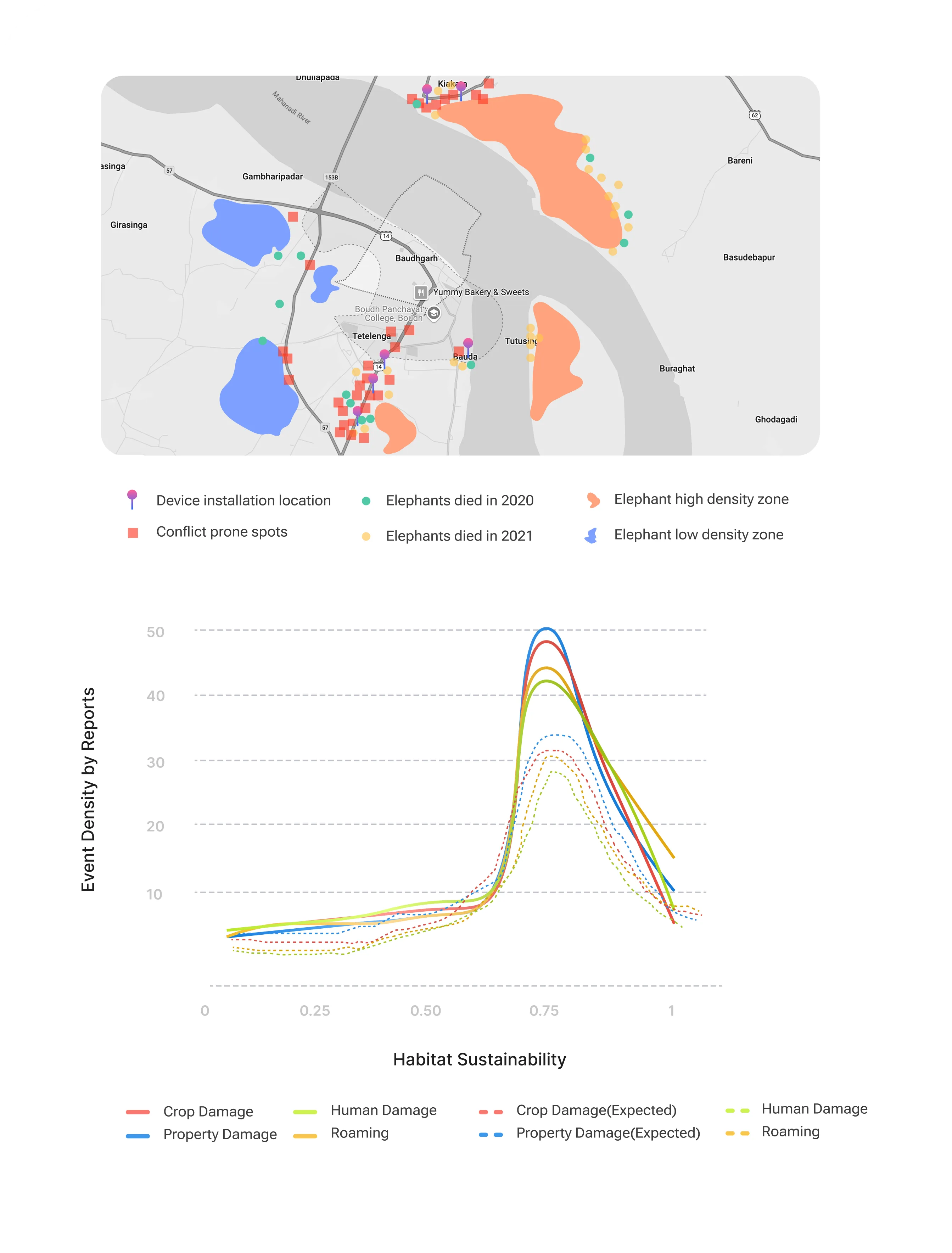
System-generated graphs clearly illustrated spikes in seismic activity corresponding to elephant movement, accurately marking detection events. Thermal imagery further validated these detections, capturing clear silhouettes of elephant herds moving through forest corridors during low-visibility conditions.
Real-Time Alerts & Preventive Action
Real-time alerts enabled proactive decision-making:
- Railway operators received timely warnings, allowing speed reduction or operational precautions
- Motorists and field teams were informed in advance, preventing last-minute evasive maneuvers
- Forest officials gained situational awareness without needing continuous physical patrols
This shift from reactive response to preventive intervention proved critical in avoiding accidents.
Building Community Trust
Initial skepticism from local communities gradually transformed into trust as results became visible. Villagers began to see technology not as an intrusion, but as a protective layer—safeguarding both human lives and wildlife.
A forest ranger involved in the deployment shared:
“We used to feel helpless, watching these majestic animals fall victim to trains.
Now, we have a tool that gives us hope.”
Conclusion: A Future Where Technology Meets Nature
As dawn breaks over the forest, elephants continue their journeys along ancient corridors—unaware of the invisible guardians now watching over them. For Macnman Technologies Pvt Ltd, this project represents more than a technical achievement; it reflects a commitment to harmonize human progress with wildlife preservation.
By combining ground sensing, thermal intelligence, long-range communication, and field-proven engineering, Macnman has demonstrated that technology can serve as a silent ally to conservation—reducing risk without disrupting natural behavior.
This system proves that modern infrastructure and endangered wildlife do not have to exist in conflict. With thoughtful design, rigorous validation, and close collaboration with forest and railway authorities, safer coexistence is achievable.
This deployment marks not an end, but a beginning—laying the foundation for scalable, data-driven conservation efforts across vulnerable corridors.
The journey continues, one step at a time.